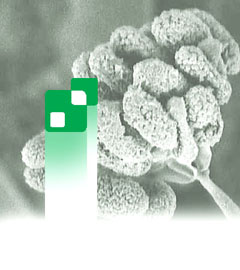





Biological contamination odor and inanimate allergen mold stains are a common form of fungi, the family that includes mushrooms. Fungi differ from common plants primarily because the fungi do not possess chlorophyll -- the material that gives plants their greeness and is essential to photosynthesis (the process by which plants derive energy from sunlight.) Still, a fungus can be useful, even tasty.
However, fungi need energy from somewhere, and most often that source is a polysaccharide -- a complex organic molecule. The most common polysaccharide is cellulose. And cellulose is commonly found in wood products, including paper, and unfortunately, including the very paper that is a component in standard wall board or drywall. Add in the fact that these contaminates thrive on dampness and it's easy to see that a basement can become a virtual greenhouse for biological contanimation, inanimate allergens and mold stains & odors -- just without the green.
As these contaminates spread throughout a structure, it is unsightly and unhealthy and has ruinous effects on the surfaces and substances on which it feeds. For generations the only solution was to remove the host medium. In other words, demolition. The other choice was the equivalent of chemical blasting -- applying toxic, volatile chemicals. Toxicity by nature is problematic.
XSpor LifeSciences has studied biological contanimation odor cleaner and inanimate allergen mold stain cleaner, and we've studied the needs of property owners with equal care.